Psychometrics, the Psychological Bias
RAW_SCORE on the top panel and mean factor loading on the bottom panel, deliberately not sharing an axis since they are different quantities.Origins: From Veterinary Records to Human Psychometrics
The multidimensional thinking behind GoDataX Human 7 did not start with people. In 2012 I built a first version of a Data Warehouse using multidimensional modeling techniques to store the evolution of animal care, veterinary visits and treatments, star-schema fact and dimension tables designed so a veterinarian could follow a patient’s history and track how a disease and its treatment evolved over time, rather than reading it back from a flat, one-off medical record.
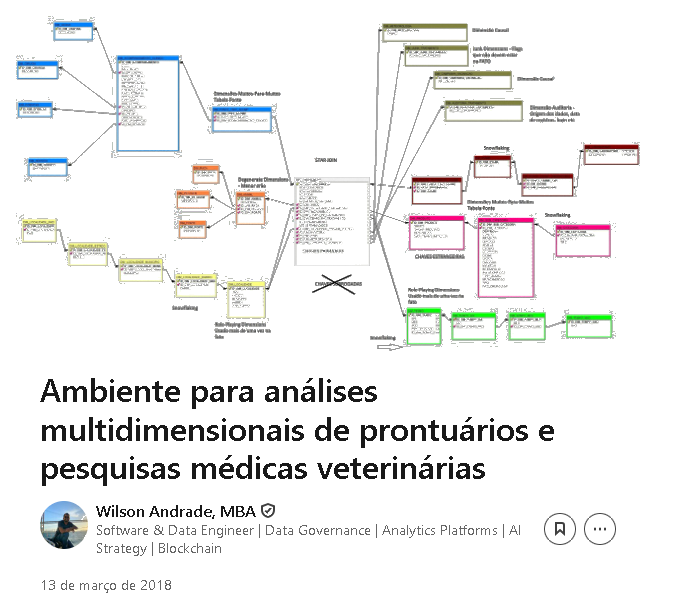
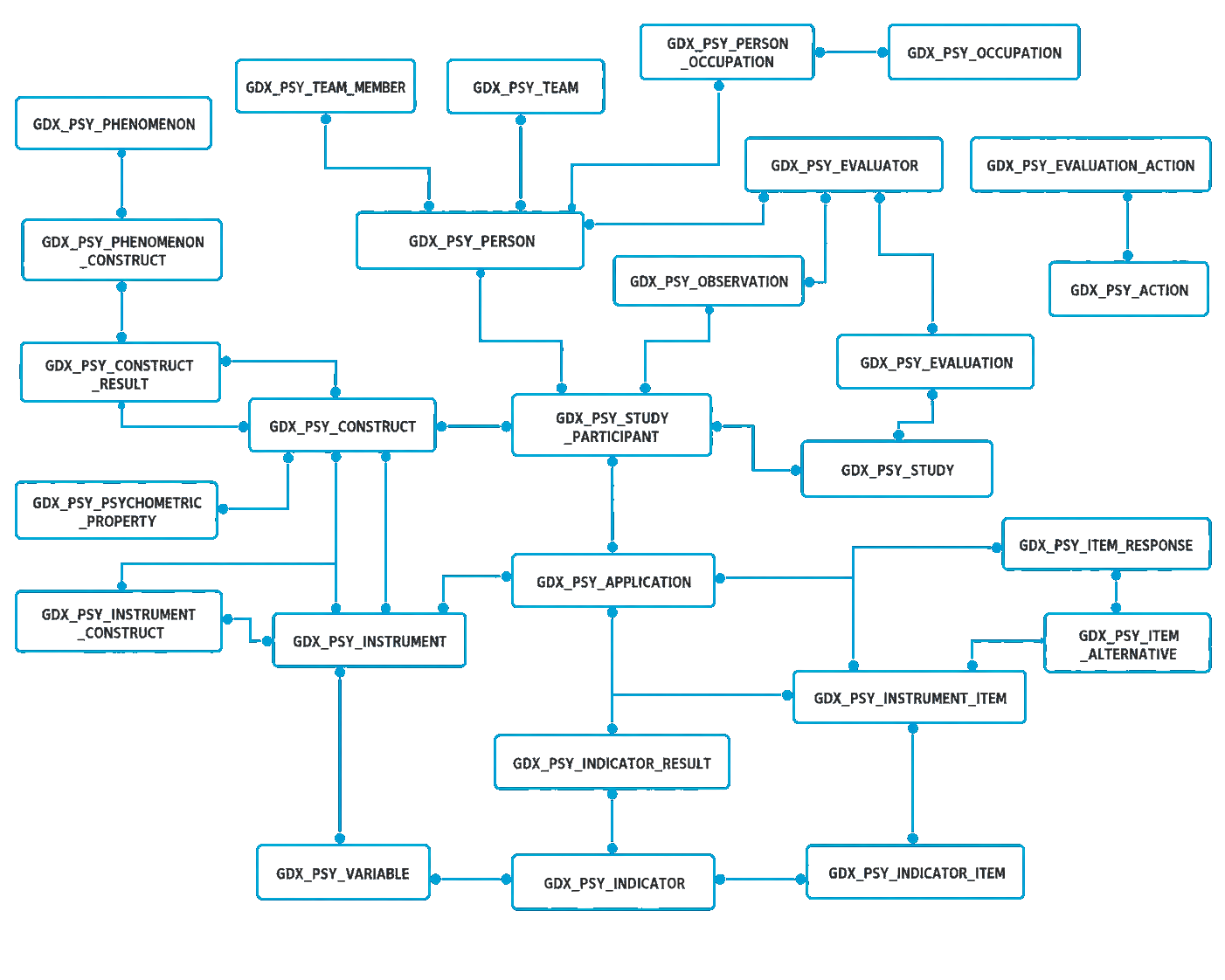
That same modeling discipline was later pointed at people. In 2018 I created the first relational database designed to receive psychometric data tied to psychological studies of individuals and groups, able to store measurement instruments, behavioral measurement scales, and the results of statistical analyses. That schema, evolved over the years, is the direct ancestor of the GDX_PSY_* relational model used throughout this article.
Having the database was not the same as knowing how to use it. After building it, I did not yet know how to convert behavior into numbers, so I started searching for answers in psychology and philosophy faculties. That search led to an invitation from Professor Marcos Aguiar to participate in a master’s research group, the beginning of the collaboration that would later a book produced through the collaborative work of 33 researchers focused on military and public security contexts.
What Is Psychometrics?
Psychometrics is the scientific discipline of measuring psychological attributes such as cognitive abilities, personality traits, and behaviors. By transforming abstract psychological concepts into quantifiable data, psychometrics enables objective evaluations and comparisons. Rooted in psychology and statistics, psychometric assessments are used to understand human behavior, predict performance, and support decision-making in various fields, including mental health.
Thoughts without content are empty; intuitions without concepts are blind.
— Kant, Critique of Pure Reason, A51/B76
The Measurement Instrument: A Research Book, 33 Authors
|
The content backing this work draws on a book that is itself the result of a group of researchers interested in military and public security contexts. As their first publication, they focused on studies concerning specific psychometric properties related to the validity and reliability of measurement instruments designed to support the assessment of observable phenomena in organizational settings, motivation, adaptability, self-efficacy, organizational identification, organizational citizenship, organizational flexibility and receptiveness, engagement, perceived stress, job and life satisfaction, personality, locus of control, self-esteem, social anomie, organizational commitment, coping strategies, positivity, and transferable skills. The research group came together through shared interests and periodic meetings linked to the Graduate Program in Psychology at the Federal University of Rio de Janeiro (UFRJ). Approximately 33 authors interested in these topics contributed their efforts to this initial work, addressing subjects related to education, such as competency-based learning, as well as individuals’ behaviors and perceptions within their work environments. The intent is for these investigations to move beyond diagnosis, toward interventions aimed at improving quality of life and well-being through self-knowledge, self-determination, and self-regulation. |

|
Cognitive & Knowledge Integration: Data Warehouse, integrated timelines, Knowledge Graphs, ontologies, Explainable AI, relationship analysis, and a clear separation between measurement, calculation, evidence, report, and interpretation.
Use Case: Military Academy Study (2019)
The dataset that anchors GoDataX Human 7’s psychometric layer comes from (intended solely for initial scientific validation) the study “Predictors of Adaptability to Military Higher Education” (Military Academy), administered to cadets and officer cadets. It carries 423 respondents (one row per person, IDs 784–1645, no duplicates) and 159 variables: one identifier, 137 raw questionnaire items, one nominal context variable (curricular year), and 20 pre-computed dimension scores. Every variable is numeric, computed scores carry decimal places (item means), while raw items are integers on a 1–5 scale (or 0–4 for the positivity scale). It is important to note that we may conduct further studies and psychometric analyses later, the data from the book and the military study were used solely for the validation and confirmatory analysis of the KPI extracted.
Some Instruments identified in the dataset
Six validated, multi-item psychometric scales were identified in the raw data with high confidence, their names, items and response anchors matching the study’s own summary table:
| Scale | Raw columns in the .sav | Dimensions → computed column | Response anchor |
|---|---|---|---|
| Hardiness | Ha1–Ha30 (30 items) | Commitment → HARDcompromis · Control → HARDcontrole · Challenge → HARDdesafio | 1=Not True at All … 5=Completely True |
| Student Engagement Scale | En1–En14 (14 items) | Vigor → ENGAGvigor · Dedication → ENGAGdedicac · Absorption → ENGAGabsorc | 1=Never … 5=Always |
| Career Adapt-Abilities Scale (CAAS) | AC1–AC28 (28 items) | Concern → ACpreocup · Control → ACcontrole · Curiosity → ACcuriosid · Confidence → ACconfianc | 1=Very little … 5=A lot |
| Satisfaction With Life Scale | SV1–SV5 (5 items) | Single index → SATISFVIDA | 1=Never … 5=Always |
| Job Satisfaction Scale | ST1–ST5 (5 items) | Single index → SATISFTRAB | 1=Never … 5=Always |
| Positivity Ratio Scale | RP1–RP20 (20 items) | Positive Emotions → EmocPos (items 1,4,8,11,12,13,14,15,16,19) · Negative Emotions → EmocNeg (items 2,3,5,6,7,9,10,17,18,20) | 0=Not at all … 4=Very much |
Three further single-item indicators were identified with lower confidence, they are not individually named as separate columns in the .sav, and are recorded directly as one computed column each rather than as a raw-item → dimension roll-up:
| Indicator | Computed column | Response anchor |
|---|---|---|
| General Emotions Level | Probably embedded in the final EmocPos / EmocNeg | 0=Not at all … 4=Very much |
| Personal Satisfaction | SatPes | 1=Not satisfied at all … 5=Completely Satisfied |
| Perceived Control of Life | CtrlVi | 1=No control … 5=Total Control |
Every raw item, response anchor and computed dimension was mapped into a relational model (the GDX_PSY_* schema), instrument, construct, dimension, item, and response, each as its own table, so that the same battery can be re-scored, re-analyzed, and extended without re-deriving the study from scratch. The load itself runs as a pipeline: SPSS psychometric analysis → load relational database, packaged as the GDX_SKILL_LOAD_RLT_MODEL_DB skill.
Structural mapping to the GDX_PSY_* schema
| Dataset concept | GDX_PSY_* mapping | Notes |
|---|---|---|
| The study as a whole (“Predictors of Adaptability to Military Higher Education”) | GDX_PSY_STUDY (1 record) | TITLE and METHOD from the study’s own summary; STATUS = 'COMPLETED' (data already collected). |
ID column (784–1645) | GDX_PSY_PERSON.EXTERNAL_IDENTIFIER or GDX_PSY_STUDY_PARTICIPANT.ANONYMOUS_CODE | The dataset is already anonymized, no name or email in the .sav. ANONYMOUS_CODE is the primary target; the synthetic GDX_PSY_PERSON.NAME is a generic placeholder, since it is not in the data. |
Each row of the .sav (1 person = 1 battery application) | GDX_PSY_STUDY_PARTICIPANT (1 row) + GDX_PSY_APPLICATION | ano (curricular year) is the natural candidate for EXPERIMENTAL_GROUP, a schema gap, there is no column dedicated to “curricular year”/cohort, so EXPERIMENTAL_GROUP is the closest available field. |
| Each scale (Hardiness, Engagement, CAAS, …) | GDX_PSY_INSTRUMENT (1 row per scale) + GDX_PSY_INSTRUMENT_CONSTRUCT | NAME/VERSION from the “Scale” column above; INSTRUCTIONS from each instrument’s own instruction text. |
| Each dimension/subscale (Commitment, Control, Challenge, Vigor, …) | GDX_PSY_CONSTRUCT + GDX_PSY_VARIABLE | The overall phenomenon (e.g. “Hardiness”) plus the dimension (e.g. “Commitment”); each “Dimensions → computed column” entry above is one GDX_PSY_VARIABLE. |
Raw item (AC1, Ha7, …) | GDX_PSY_INSTRUMENT_ITEM (1 row per item, ITEM_ORDER = item number in the original scale) | STATEMENT_TEXT is not in the .sav, it was typed in from the source deck and translated to English; RESPONSE_TYPE = 5-point Likert (or 0–4 for the Positivity Ratio Scale). |
| Response anchors (1=Not True at All…5=Completely True, etc.) | GDX_PSY_ITEM_ALTERNATIVE (5 rows per item, NUMERIC_VALUE 1–5 or 0–4) | Seven distinct anchor sets were identified across the instruments; a handful of items (ef, an, red prefixes) have unknown anchors and are flagged for follow-up. |
Confirmatory & Exploratory Factor Analysis on the Career Adapt-Abilities Scale
The Career Adapt-Abilities Scale (Concern, Control, Curiosity, Confidence, 28 items, n = 423) received the deepest statistical treatment so far: a Confirmatory Factor Analysis (CFA) testing the theorized 4-factor structure, followed by an Exploratory Factor Analysis (EFA) as an independent check, and a Pearson correlation pass between the four manifest dimension scores.
| χ² (df=344) | χ²/df | RMR | GFI | AGFI | CFI | RMSEA |
|---|---|---|---|---|---|---|
| 893.23 | 2.60 | 0.027 | 0.828 | 0.811 | 0.886 | 0.062 |
RMR and RMSEA land in the acceptable range; CFI, GFI and AGFI fall just below the conventional 0.90 cutoff. Read together, the 4-factor structure is directionally supported by the data, every loading is positive and significant, without being an excellent fit by the strictest textbook standard. Cronbach’s α is comfortably above 0.80 throughout: Concern 0.82 · Control 0.80 · Curiosity 0.83 · Confidence 0.87 · full scale (28 items) 0.93.
| KMO | Bartlett χ² (df=378) | % var Concern | % var Control | % var Curiosity | % var Confidence |
|---|---|---|---|---|---|
| 0.934 | 5056.30 | 5.96% | 4.76% | 4.78% | 6.24% |
A KMO of 0.934 is about as strong a sampling-adequacy result as this kind of survey data produces, the item set is very well suited to factor analysis. Rotated loadings came out moderate (|0.25–0.51|), weaker than the CFA’s standardized loadings (0.45–0.77); that is expected rather than a defect, since Varimax forces the four factors to be uncorrelated while the CFA already found them meaningfully correlated. That correlation shows up directly in the Pearson pass between the four dimension scores, all significant at p < 0.001:
| Dimension pair | r |
|---|---|
| Concern ↔ Control | 0.57 |
| Concern ↔ Curiosity | 0.61 |
| Concern ↔ Confidence | 0.55 |
| Control ↔ Curiosity | 0.57 |
| Control ↔ Confidence | 0.64 |
| Curiosity ↔ Confidence | 0.69 |
Every one of these 154 statistics (fit indices, loadings, means, standard deviations, correlations) is stored as its own row in GDX_PSY_PSYCHOMETRIC_PROPERTY, not buried in a spreadsheet:
| Analysis | Rows loaded | Date | Loader |
|---|---|---|---|
| CFA | 54 | 2026-09-11 | execute_afc_property_load.js |
| EFA + Pearson pass | 100 | 2026-09-13 | execute_afc_property_load.js --force |
| Total | 154 | — | — |
All of the above was re-run end to end through the GoDataX framework itself, not read off SPSS by hand, both analyses in Python:
| Analysis | Script | Key libraries | Method |
|---|---|---|---|
| CFA | run_cfa_career_adaptability.py | pyreadstat · semopy (2.3.11) | ML extraction, 4-factor correlated model, reads the .sav directly |
| EFA | run_efa_loadings_means_sd_career_adaptability.py | pandas · pyreadstat · scikit-learn (FactorAnalysis) · scipy.stats (chi2, pearsonr) | Varimax rotation; KMO and Bartlett’s test hand-rolled in the script, since factor_analyzer 0.5.1 is broken against scikit-learn ≥ 1.6 |
The exported figures were checked against SPSS’s own output before being loaded to Firebird, so the numbers above are reproducible from the raw .sav without SPSS in the loop.
Scientific objectivity is not a matter of individual impartiality, but of the public and critical character of science.
— Karl Popper, on the public and critical character of science
This closes out the UFRJ master’s research on the measurement-instruments book in the military context. The Section 1 calculations were re-run by the Human 7 project, producing small, insignificant divergences in the numeric results due to the use of different libraries and minor variations in fractional scales; this re-run was meant to validate the new database, the project’s new structure, and the other implemented components. From Section 2 onward, everything is a new perspective built by the GoDataX Human 7 project.
This is an excerpt covering the psychological bias of the instrument. Read the full article, GoDataX Human 7: A Multidimensional Measuring Instrument for Human Evolution, for the physiological, metaphysical, philosophical, energetic and remaining sections.