
Cardiac Coherence, the Physiological Bias
No one has yet determined what the body can do.
— Spinoza, Ethics, III, Prop. 2, Scholium
GoDataX Human 7 incorporates the cardiac-coherence perspective to add a physiological dimension to the instrument’s psychometric analyses. Using indicators such as heart rate, RR intervals, heart-rate variability (HRV), and related metrics, it becomes possible to observe physiological responses tied to different states of activation, regulation, and recovery.
This data is not meant to replace, independently validate, or clinically confirm the psychological results, but to act as a complementary layer of physiological evidence, allowing subjective and objective indicators to be compared. This multidimensional integration helps make GoDataX Human 7 more robust, widening the capacity to analyze the relationships between psychological dimensions and physiological responses, while always preserving the distinction between scientific measurement, interpretation of results, and professional evaluation.
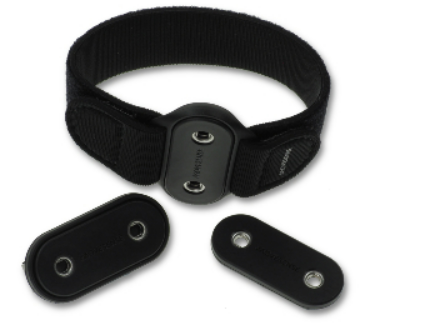
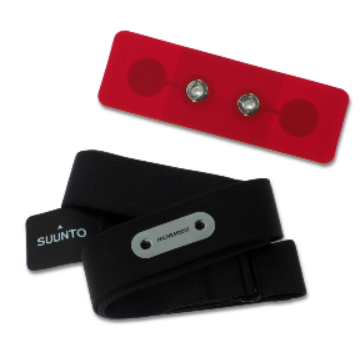
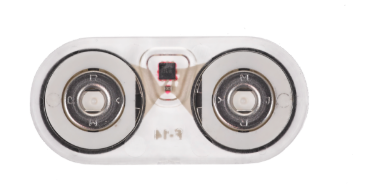
The equipment measures a set of signals and indices directly, before any derived calculation:
| Signal / index | What it represents | Importance |
|---|---|---|
| Raw ECG | Cardiac electrical activity in one lead | Main signal for detecting beats and validating measurement quality |
| RR interval | Time between two consecutive R peaks | Main datum for calculating HRV, RMSSD and SDNN |
| BPM | Beats per minute | Indicates the momentary level of cardiac activation |
| Accelerometer X/Y/Z | Body movement and acceleration | Helps separate psychological stress from physical activity |
| Gyroscope X/Y/Z | Rotation and change of orientation | Identifies movement, posture and agitation |
| Magnetometer X/Y/Z | Orientation relative to the magnetic field | Complements position and movement detection |
| Internal temperature | Temperature of the device itself | Technical control; does not correspond to body temperature |
| Battery and events | Operational state of the sensor | Control of capture quality and continuity |
Its software then derives the heart-rate-variability indices that actually indicate physiological state:
| Calculated index | Source | What it can indicate |
|---|---|---|
| RMSSD | Sequence of normal RR intervals | Parasympathetic regulation, recovery and relaxation |
| SDNN | Sequence of normal RR intervals | Global cardiac variability of the window |
| Mean RR | RR intervals | Average cardiac rhythm |
| Mean BPM | ECG or RR | General cardiac activation |
| pNN50 | Successive differences of RR | Percentage of intervals whose difference exceeds 50 ms |
| SDSD | Successive differences of RR | Short-term variability |
| HF | Spectral analysis of HRV | Component associated with respiration and vagal modulation |
| LF | Spectral analysis of HRV | Low-frequency oscillations of cardiovascular regulation |
| LF/HF | Ratio between LF and HF | Traditional metric, but should not be read simply as “sympathetic/parasympathetic balance” |
| Estimated respiratory rate | ECG/RR oscillations | Approximate number of breaths per minute |
| Coherence index | RR plus respiration | Regularity and concentration of the cardiac oscillation |
| Artefact percentage | ECG, RR and movement | Proportion of data that had to be corrected or discarded |
| Movement index | Accelerometer and gyroscope | Level of rest, agitation or physical effort, keeps stress from being confused with exercise |
Priority order for analysis
Not every signal carries equal analytical weight, the project ranks them by how directly each one feeds a reliable HRV read:
| Priority | Index | Reason |
|---|---|---|
| 1 | Raw RR | It is the raw material of HRV analysis |
| 2 | RMSSD | Most practical indicator of short-term autonomic change |
| 3 | Mean BPM | Shows increase or reduction of activation |
| 4 | Respiration | Directly affects RMSSD and coherence |
| 5 | Movement | Avoids confusing physical effort with stress |
| 6 | SDNN | Complements global variability |
| 7 | Artefact percentage | Determines whether the result is reliable |
| 8 | Coherence | Useful in guided breathing and biofeedback |
| 9 | HF | Complements vagal and respiratory analysis |
Relation with the states
Reading RMSSD, BPM, respiration and movement together lets a capture window be read against a set of probable physiological states:
| Probable state | RMSSD | BPM | Respiration | Movement |
|---|---|---|---|---|
| Relaxation | Higher than baseline | Lower or stable | Slow and regular | Low |
| Acute stress | Lower | Higher | Fast or irregular | Low or moderate |
| Physical effort | Lower | Much higher | Faster | High |
| Recovery | Increasing | Decreasing | Normalizing | Low |
| Silent worry | May decrease | May stay normal | May stay shallow | Low |
| Coherent breathing | Increases considerably | Oscillates regularly | Close to 6/min | Low |
Physiological state = RMSSD + BPM + RR + movement + respiration + quality
The Cardiac Coherence relational model
Every capture session is loaded into its own relational schema (GDX_CC_*): a session anchors the device, the person, and the raw ECG samples, RR intervals and motion data it produced, which are then reduced into HRV windows for analysis, the same discipline applied to the psychometric side of the project.
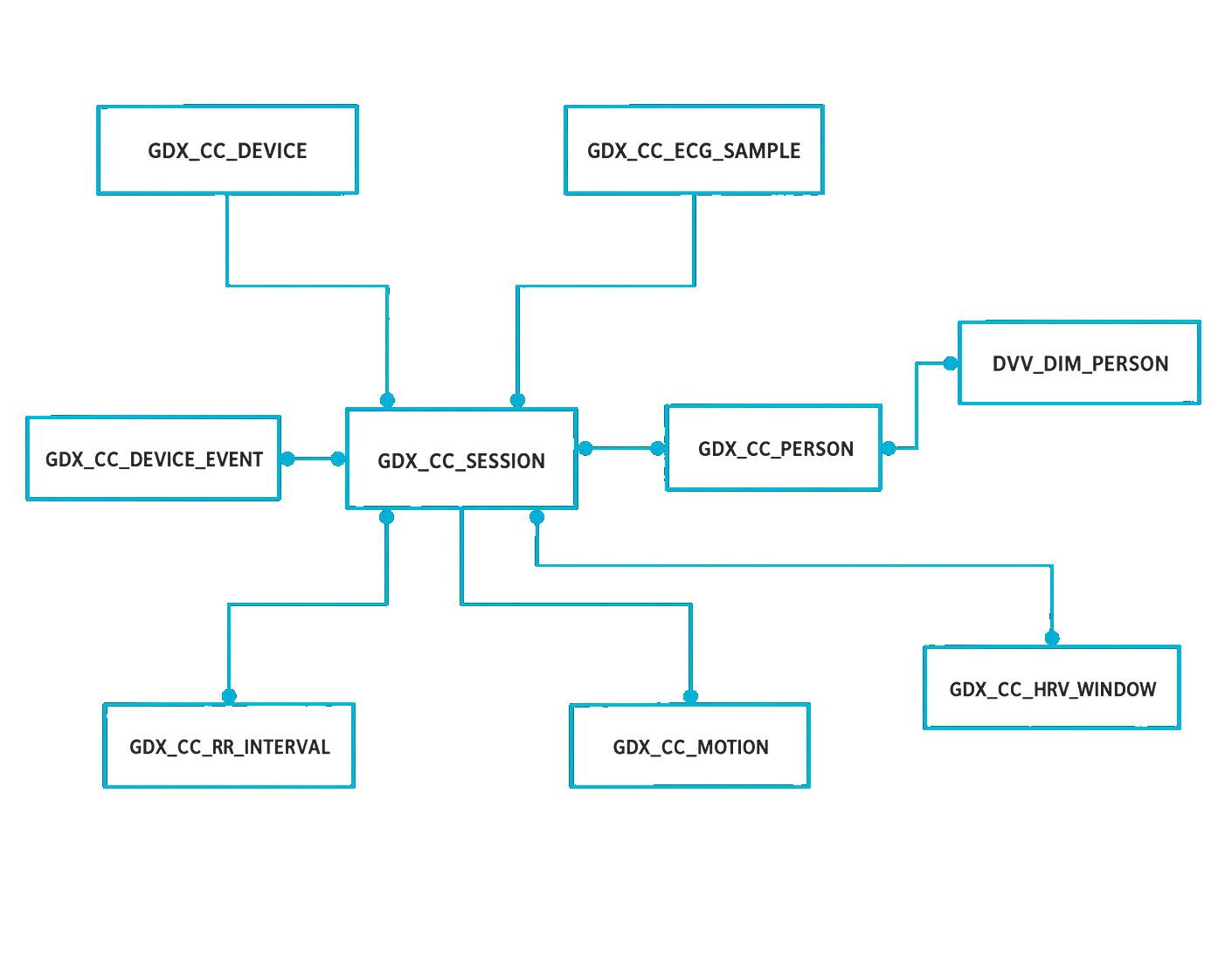
GDX_CC_* relational model behind the cardiac-coherence layer.Put together, RMSSD, BPM, RR, movement, respiration and signal quality, these form a physiological state, but not yet a psychological one: to measure worry or anxiety as a construct, this stream still has to be combined with self-report or a validated scale. That is exactly the bridge GoDataX Human 7 is built to make.
Multidimensional sensor roadmap
The following shows the perspectives already implemented in GoDataX Human 7, as well as the sensors that may be integrated into the instrument in the future. Progressively incorporating these different data sources aims to broaden the multidimensional analysis capability, enabling psychological, physiological, and behavioral indicators to be cross-referenced.
This evolution seeks to increase the robustness, precision, and consistency of the analyses performed, by combining multiple pieces of evidence and comparing different indicators, contributing to increasingly complete and well-founded assessments.
| Dimension | Recommended sensor | Function | Status |
|---|---|---|---|
| Cardiac | Medical ECG/HRV sensor | ECG, heart rate, RR interval, HRV | ✓ Implemented |
| Autonomic | BITalino EDA | Sympathetic activation, emotional response | Roadmap |
| Respiratory | Vernier Respiration Belt | Real breathing, rhythm, cardiac sync | Roadmap |
| Muscular | BITalino EMG | Body tension and relaxation | Roadmap |
| Cerebral | Muse 2 | EEG activity and brainwave bands | Roadmap |
| Oxygenation | Bluetooth oximeter | Saturation and recovery | Roadmap |
| Psychological | Psychometric scales | Subjective experience, states, and traits | ✓ Implemented |
This is an excerpt covering the physiological bias of the instrument. Read the full article, GoDataX Human 7: A Multidimensional Measuring Instrument for Human Evolution, for the psychological, metaphysical, philosophical, energetic and remaining sections.